The Archbishop of Canterbury does not always have an easy time of it. Simon Sudbury was beheaded by the peasants during Wat Tyler’s rebellion. William Laud was beheaded by parliament for being too high church. Thomas Becket is history’s most famous victim of the device much loved by rulers, asking of a question in the mischievous hope it is understood as a command: Will no one rid me of this turbulent priest? Finally, there is Thomas Cranmer, who had the difficult gig of holding the see under King Henry VIII and was rewarded for his effort by being burnt at the stake in the short reign of Henry’s elder daughter Mary.
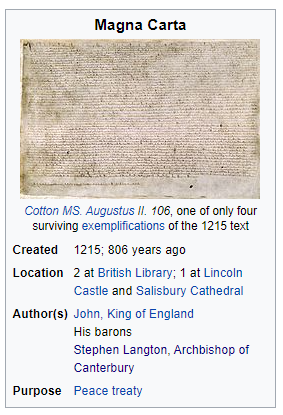
One archbishop who suffered but survived was Stephen Langton. Apart from his work on English canon law, he is usually credited with the authorship of “Veni Sancte Spiritus”, the drafting of Magna Carta, and the introduction of chapters into the Bible. Verses took another 350 years, with the result that the expression “chapter and verse” not only didn’t but couldn’t appear before the early 17th century.
Langton died on 9 July 1228. Wikipedia accords him, I think wrongly, a feast day in the Anglican communion, but accurately records another role: