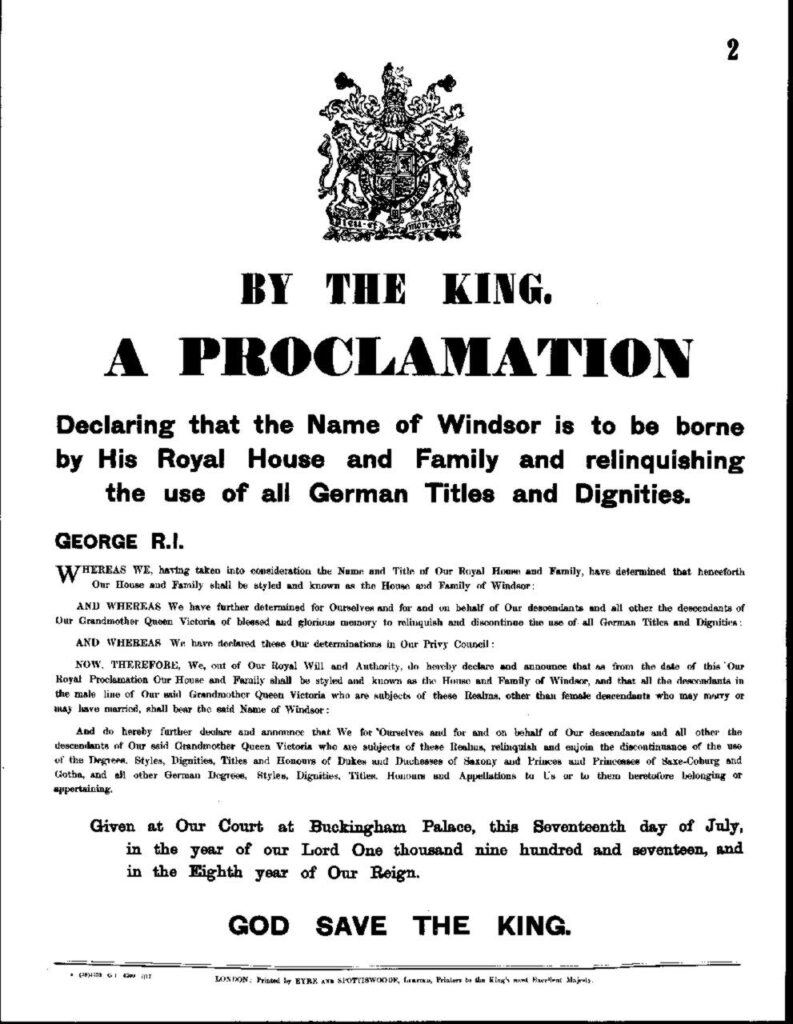
On 17 July 1917, the House of Saxe-Coburg and Gotha became the House of Windsor.
Many reasons have been advanced: the unpopularity of all things German; the London bombing by German Gotha planes; and rising republicanism in Russia, of course soon to lead to the murder of the House’s cousins.
Change had been in the wings. The month before, the king had directed that various family members would relinquish German names and titles and adopt British surnames. A number of new peers were created, Prince Louis of Battenberg becoming Marquis of Milford Haven.
Many reasons have also been advance for “Windsor”, including the homely image of the king in his study at Windsor Castle asking a rhetorical why not? Research in the National Archives suggests that the idea came from the king’s private secretary, Baron Stamfordham.
A note in the National Portrait Gallery makes the intriguing suggestion that “Windsor” was chosen as variation on ”Wettin”, the late Prince Albert’s personal surname. While Victoria hated the name, it defined an ancient Saxon house. Whether the suggestion is correct, it is understandable both at a family level and in a “We’re all Angles or Saxons and the Prussian enemies are latecomers” kind of way.