Nations comprise people and lands. In systems where the parliament or congress has two houses, the lower house is usually the people’s house and the upper house the house of lands.
The house of lands is usually less powerful than the house of peoples, the famous exception being the US.
As a rule of thumb, the average age of upper house members is higher than that of lower house members. This cannot surprise; “senate”, a word often used for upper houses, is a word for a council of elders drawn from “senex”, Latin for old man.
We mustn’t forget the Greeks. Their old man was a “geron”, from which we get geriatrics and from which the Spartans named their senate the Gerousia. Through the Latin Gerontius to the Welsh there is the valiant Arthurian St Geraint, whose feast day is 10 August.
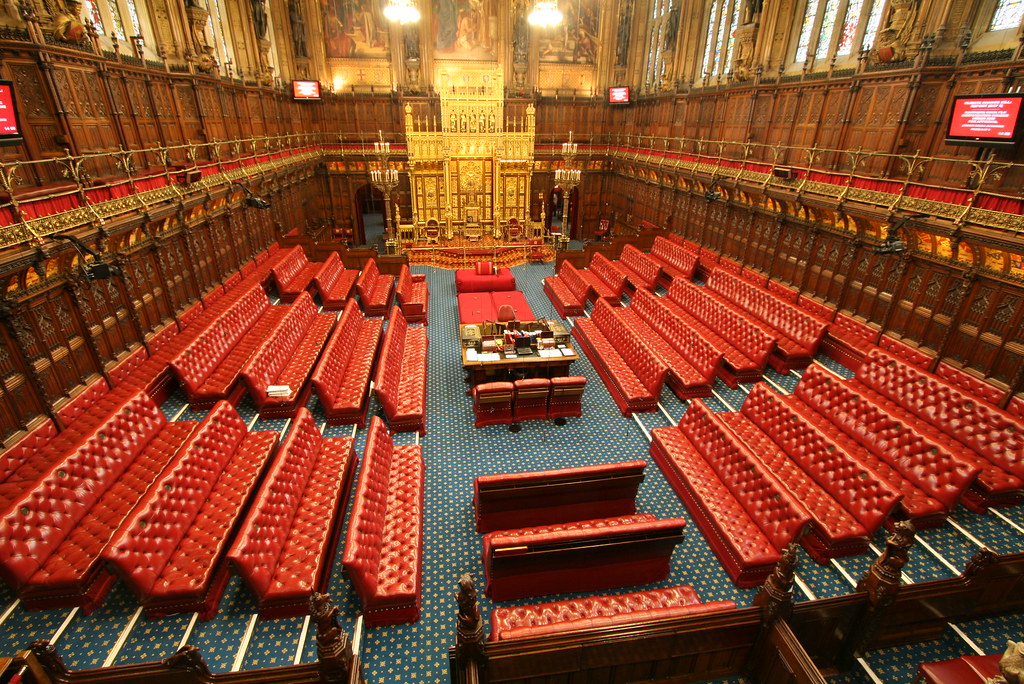
In the UK, the upper house is the House of Lords. At the beginning of the 20th century it was different to other upper houses but, in one way, much the same. The way it was similar was land. It was not comprised of people representing the different lands of the kingdom, England, Scotland and Northern Ireland, as well as St Geraint’s homeland. Rather, it comprised many members who owned, quite literally, much of it.
In 1909, Chancellor of the Exchequer Lloyd George introduced his “People’s Budget”, with a large number of tax increases to fund a large number of social reforms. One proposition was a land tax, a 20% tax on the unearned increase in the value of land, payable on either death or sale. For landowners benefitting from increasing prices upon urbanization and industrialization, it was a disaster.
The House of Lords rejected the budget. While the Lords later passed it, the ultimate result was a proposal whereby the right of the Lords to veto money bills was removed. Upon the threat that the king would be asked to flood the Lords with new members amenable to the bill, the House passed the proposal on 10 August 1911. It is now known as the Parliament Act.
In an irony largely attributable to but not wholly caused by the march of democracy, the House of Lords, unlike other upper houses, has more members than the kingdom’s lower house, the House of Commons. It is regularly numbered as the second largest legislative body after the National People’s Congress of China.