The question “what are we fighting for” is vexed and ever asked but is apt to overshadow the equally important “who are we fighting for”. Or is that “whom”? Anyway, if the “who” is our nation, the answer is usually “ourselves”. It has not always been so.
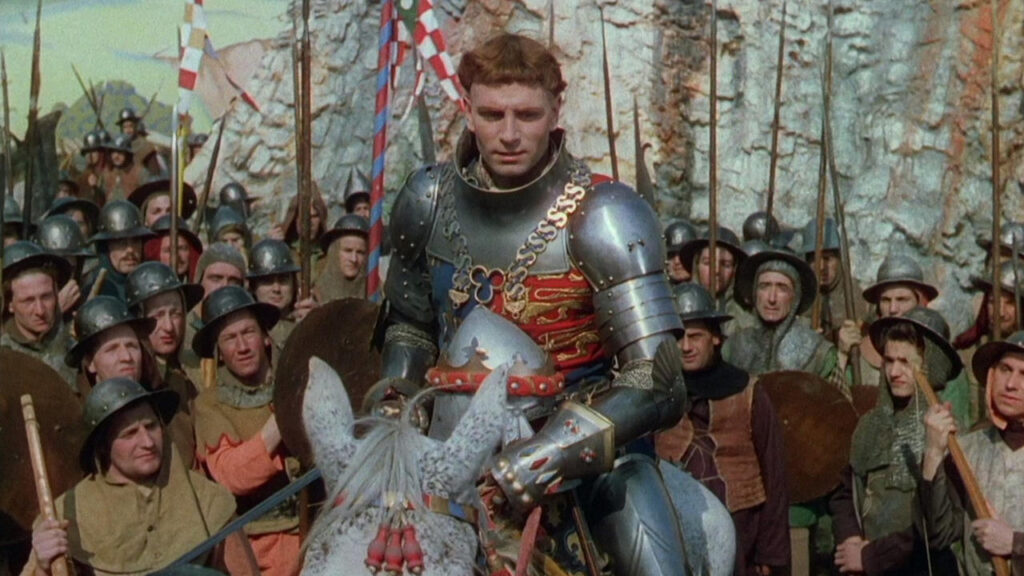
On 25 October 1415 Henry V of England led his troops to victory at Agincourt. The English famously used longbows and the French, including a large swag of their nobles, fell in the mud, some drowning in their helmets. The victory was huge at the time and continues, courtesy of William Shakespeare, Laurence Olivier and Kenneth Branagh, to hold the mind.
The truth is true but incomplete. In 2010 in Washington DC a self-styled Supreme Court of the Amalgamated Kingdom of England and France convened in a mock trial. The bench comprised legal talent including Ruth Bader Ginsburg and Samuel Alito holding down supreme court justiceships as day jobs. The bench ruled that Henry’s slaughter of French POWs was legally unjustified and awarded damages.
Let’s explore this Amalgamated Kingdom thing. The reality is that Henry, like English kings before and after, was fighting for himself, a personal right to the kingdom of France. Yes, the French people weren’t overly enamoured but nor was the English parliament. After all it was that body, the public parliament of the nation, who had to fund the personal ambitions of the king.
Over following centuries, the ambitions of the English monarchs fell away but not the dream.
Take for example that pivotal constitutional document the 1701 Act of Settlement which secured the English throne for the German house of Hanover against the Catholic – and more importantly French-infected – house of Stuart. Almost 300 years after Agincourt, the legislature is blithely referring to “the Crown and Regall Government of the Kingdoms of England France and Ireland and the Dominions thereunto belonging”.
The English king’s claim to France was only dropped in the early 19th century under the rule of King George III, who had taken the throne on 25 October 1760. The new language began with the creation of the United Kingdom in 1800. By 1801 the fleurs-de-lys, a part of the coat of arms of any claimant to the French throne, had been removed from the UK’s royal coat of arms. I expect one impetus was the fact that there was now no French throne and the UK was wanting peace with the republic. For example, the preamble to the October 1801 Treaty of London says refers to the wishes of:
His majesty the king of the united kingdom of Great Britain and Ireland, and the first consul of the French republic, in the name of the French people…”
The act creating the UK came into effect at the outset of 1801. In Trivial Pursuit terms, on New Year’s Eve 1800 King George went to bed King of Great Britain and King of France and woke up on New Year’s Day 1801 as King of the United Kingdom of Great Britain and Ireland, ready later in the year to parley with a de-kinged French people.
History never stops and when Canada came to make its arms – or more correctly the arms of the King in Right of Canada – the fleur-de-lys was reintroduced to represent the foundation of Canada by France. Appropriately, 25 October was the day in 1812 when the US naval officer with the French surname Stephen Decatur had his great victory over King George III’s UK in the War of 1812, the capture by USS United States of HMS Macedonian.